
By Melly Wilson, Pacific West CC Guam Project Lead
In the complex world of educational funding, the distance between a federal dollar and a student’s classroom can feel vast. For the Guam Department of Education (GDOE), bridging that gap requires more than just developing and managing federal grants funds—it requires a robust infrastructure of knowledge, compliance, and strategic vision. Without these supports, schools may experience delays in accessing resources, educators may miss opportunities for professional development, and students may wait longer for the programs and services intended to support their success.
In Guam, the Federal Programs Office (FPO) is responsible for applying for and managing U.S. federal dollars dedicated to K–12 education. In practice, the FPO team must navigate the nuances of the Consolidated Grant (CG) requirements, Education Department General Administrative Requirements (EDGAR), Uniform Guidance, along with competing local needs and priorities—all while balancing application and funding deadlines. A daunting task for any office. The office is also responsible for monitoring the implementation and progress of federally funded activities, ensuring that:
- programs are delivered as intended;
- resources are used effectively; and,
- investments ultimately translate to improved outcomes for students.
With new leadership and recent staff turnover within the FPO, GDOE identified a need to build internal capacities and requested support from our team, the Pacific West Comprehensive Center (Pacific West CC).
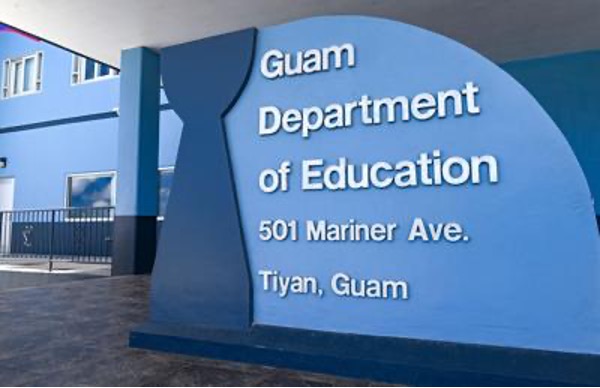
“Periods of significant change create opportunities for meaningful improvement,” said a GDOE FPO team member. “With new leadership across our division and the Department, we are taking a deliberate look at our policies, procedures, and practices to ensure they reflect today’s expectations and best practices.”
Our partnership is focused on implementing a roadmap toward sustainable systemic change. The office’s request and vision for success extends beyond ensuring compliance. They have identified a critical need to strengthen their capacity to design, implement, and monitor programs that truly move the needle on student outcomes.
Building capacity can’t be done by simply providing the FPO with summaries of federal guidance or feedback on existing FPO practices. Instead, we are collaboratively establishing a framework and the needed tools and expertise for continuous improvement—one fueled by local needs and priorities, strategic performance management principles, evidence-based practices, and deep cross-functional collaboration.
“The Pacific West Comprehensive Center’s partnership provides valuable expertise and professional learning that will help us strengthen our systems, support our staff, and enhance the services we deliver to Guam’s students and schools,” explained the GDOE FPO team member.
The Process: Co-Designing for Success
The approach is grounded in the specific needs of GDOE’s students, educators, leaders, and private non-public (PNP) stakeholders. The GDOE is an island-based unitary school system, which means it must maximize the impact of limited resources while navigating complex federal requirements to ensure that federal investments are channeled to materialize meaningful services and opportunities for students.
Like many geographically isolated education systems, Guam faces the challenges of maintaining a skilled and stable workforce, ensuring continuity of practice, and coordinating programs across a diverse educational community. These realities underscore the need for strong systems that connect compliance, implementation, and continuous improvement.
By pulling from existing data sources—e.g., GDOE’s Strategic Plan, Annual State of Public Education Reports, U.S. Department of Education Monitoring Reports, and input from PNPs and charter schools—the team is navigating and progressing through a rigorous capacity-building process that includes:
- Customized training: Co-development of a series of training modules covering everything from comprehensive needs assessments; equitable services for private schools; project planning, monitoring, and evaluation; allowable costs, indirect rates, managing expiring funds, and risk-based monitoring to the nuanced role of the PNP Ombudsman.
- Strategic alignment: Weekly thought-partnering sessions focused on aligning grant activities and outputs with GDOE’s long-term strategic priorities, ensuring that funding follows mission.
- Actionable tools: The development of a strategic performance management system, monitoring rubrics, standards operating procedures, and the feedback mechanisms the team needs to measure impact in real time.
- Expanded subject-matter expertise: Purposeful collaboration with the team of experts at the Strategic Funding and Finance Content Center.
- Scaling impact: The FPO and Pacific West CC are collaborating to launch a cross-Insular Areas community of practice focused on the Consolidated Grant and common problems of practice.
Measuring Impact: A Multi-Year Vision
Change of this magnitude doesn’t happen overnight. Our roadmap is designed for sustainability:
- The short term (within one year): Success looks like an FPO team that is confident in its adherence to the Uniform Guidance, capable of submitting a “readily approvable” Consolidated Grant application and actively monitoring and evaluating federally funded projects and programs.
- The medium term (within two-three years): We shift from learning to doing. The GDOE will have deep understanding of federal policies and guidance and be actively implementing revised, evidence-based Standard Operating Procedures and community engagement activities that ensure compliance while advancing high-priority initiatives.
- The long term (within four years and beyond): Having established sustained monitoring and evaluation practices, GDOE will see the fruits of this labor—improved academic performance and personal competencies for all students.
Why This Matters
This collaboration is not simply about grants administration, monitoring, and compliance; it is about ensuring that every resource is leveraged to strengthen opportunity for GDOE’s students.
For GDOE and federal grantors, this work represents a commitment to fiscal stewardship and high-fidelity implementation. For our educators, it means that the supplemental programs supporting their classrooms are backed by evidence, monitored for effectiveness, and secured by a stable administrative foundation.
By investing in the success of the FPO, we are ensuring that opportunities reach every school and every classroom in Guam. Together, we are building a system that doesn’t just manage grants—it strengthens the conditions that enable high-quality teaching, meaningful learning opportunities, and student success in school, postsecondary education, and the workforce.